
Choosing a remote control slope mower is not simply a matter of selecting the machine with the highest published slope figure. The right choice depends on the terrain, vegetation, cutting result, access conditions, transport limits and the way the machine will be operated.
For commercial buyers, the most useful approach is to define the site first and compare machines second. This guide explains the main factors to review before requesting a quotation or selecting a model.
Quick selection rule: document the site, choose the cutting system for the vegetation, confirm the machine’s rated operating envelope, and then check access, transport and service support.
1. Start with a site assessment
Before comparing engines or cutting widths, document where the machine will work. Two sites with the same measured slope can require very different equipment because of differences in traction, obstacles and vegetation.
Record the following information:
- Maximum and typical slope angles
- Whether the machine will travel across the slope, up and down it, or both
- Ground conditions such as firm soil, loose soil, gravel, mud or wet grass
- Vegetation type, height and stem thickness
- Ditches, drop-offs, rocks, stumps, fencing and other obstacles
- Minimum access width and overhead clearance
- Required cutting finish and mowing frequency
- Transport vehicle, trailer capacity and loading method
A short site video, several photographs and measured slope readings are more useful to a supplier than a general description such as “very steep.” For broader use-case examples, review the remote mower applications page.
2. Treat the maximum slope rating as a limit, not a target
A published maximum slope rating normally describes a machine capability under defined or suitable conditions. It does not mean that every surface at that angle is appropriate for routine operation.
Real-world slope capability can be affected by:
- Available traction and track condition
- Ground bearing capacity
- Vegetation density and moisture
- Obstacles and sudden changes in gradient
- Machine direction and attachment position
- Weather and visibility
- Operator procedure
Choose a machine with an appropriate rated operating envelope, then complete a site-specific risk assessment. Always operate within the supplied model’s rated limits and manual. Buyers comparing moderate and extreme terrain can review the commercial 45-degree slope mower guide and the extreme-slope mower guide.
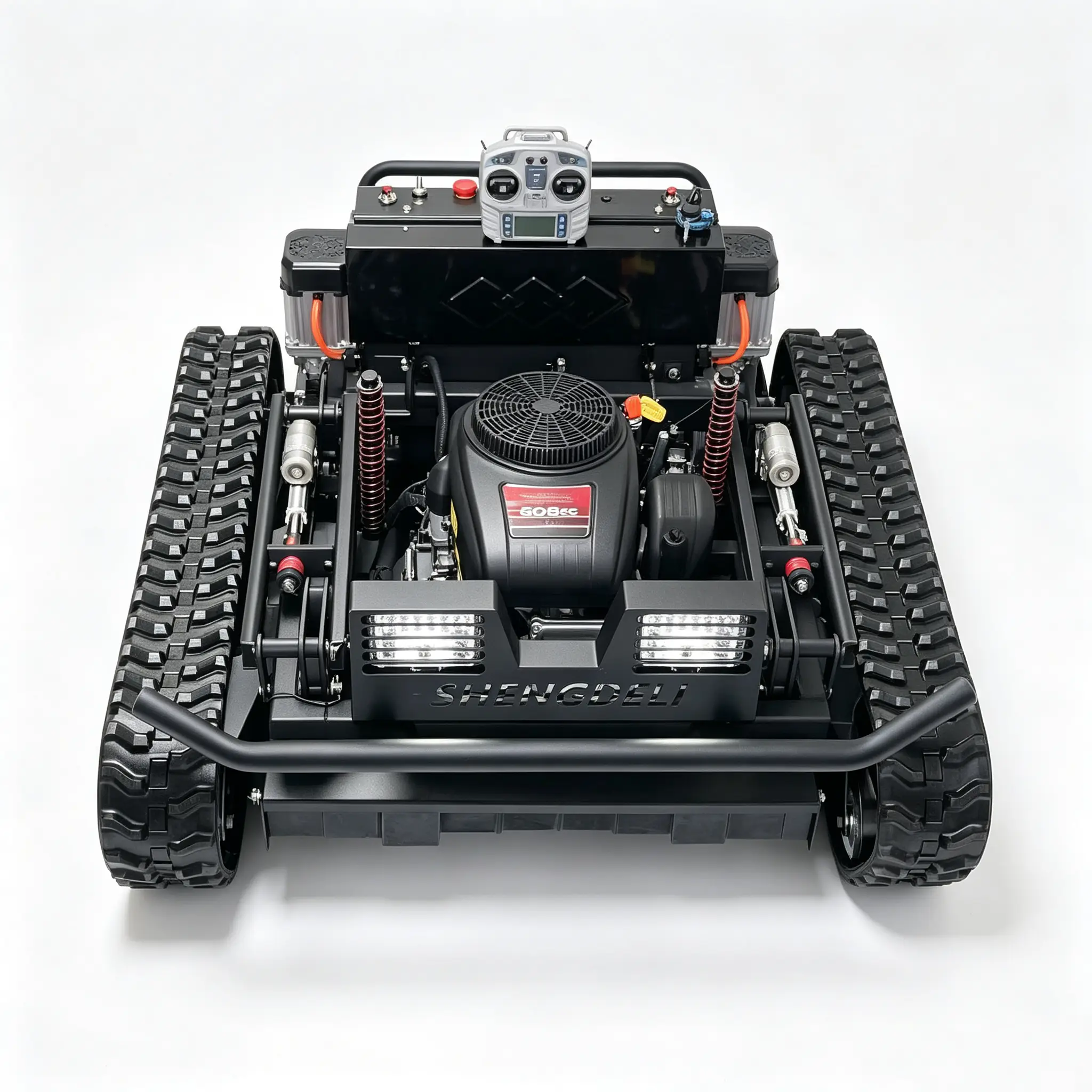
3. Choose the cutting system for the vegetation
The cutting system has a major effect on productivity and the finished result. Selecting the wrong system can lead to slower work, excessive blade wear or an unsuitable finish.
Rotary cutting systems
Rotary mowers are often considered for grass, weeds and routine vegetation maintenance where a relatively clean, efficient cut is required. They can be a practical option for maintained slopes, solar farms, orchards and similar areas, depending on the model and vegetation.
Review the available remote control rotary slope mowers when cutting speed and general grass management are the main priorities.
Flail cutting systems
Flail mowers are commonly evaluated for denser weeds, rough vegetation and sites where material reduction is more important than a lawn-style finish. The rotor, flail type and available power should be matched to the vegetation rather than selected by working width alone.
For demanding vegetation, compare the tracked flail mower range.
Multi-purpose tool carriers
A dedicated mower can be the simplest choice when mowing is the only task. If the same platform must perform several seasonal jobs, a remote control tool carrier with interchangeable attachments may provide greater utilization.
Consider the remote control tool carrier range when attachment flexibility is a key procurement requirement.
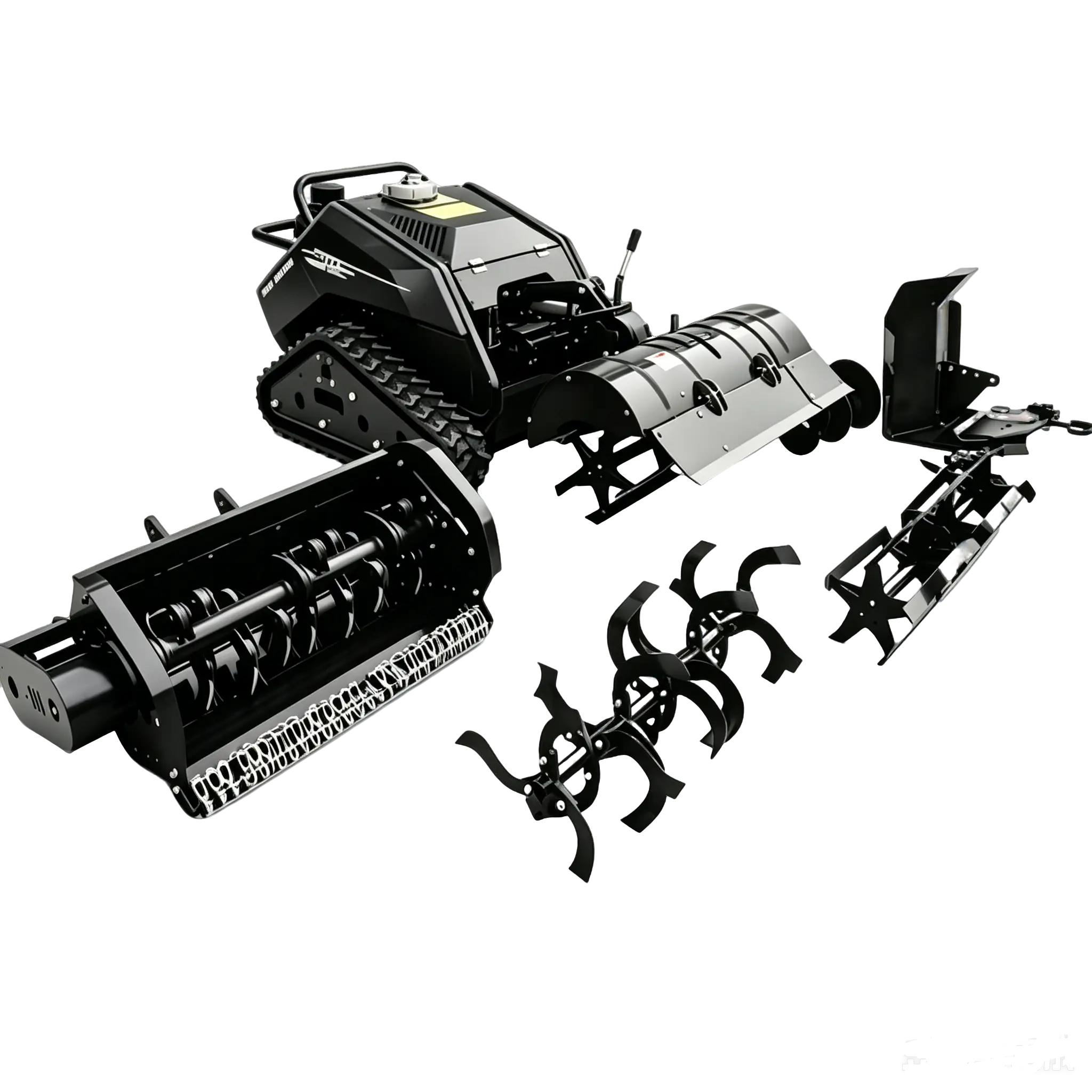
4. Compare traction, stability and chassis design
Tracks can provide a larger contact area and useful traction on uneven terrain, but track width alone does not determine whether a machine is appropriate for a site. Buyers should also examine the center of gravity, machine width, weight distribution, ground clearance and the position of the cutting system.
Ask the supplier:
- What terrain and operating direction is the model designed for?
- How do the track construction and tensioning system support the intended work?
- What obstacles and side-slope conditions should be avoided?
- How does the machine behave when the cutting deck is raised or lowered?
- What inspection is required before operating on a slope?
These questions are more useful than relying on a promotional slope number without understanding its operating conditions.
5. Select a practical cutting width
A wider cutting deck can cover more ground per pass, but it can also increase machine width, transport requirements and the space needed to turn. Narrow access routes, rows of solar panels, orchard spacing and roadside obstacles may make a more compact machine more productive in practice.
Compare the following:
- Minimum gate and access width
- Distance between trees, posts or solar-panel structures
- Turning space at the top and bottom of the slope
- Trailer deck width and payload
- Expected work rate in the actual vegetation
Published efficiency figures should be treated as indicative. Vegetation density, terrain, overlap, turning time and operator procedure can materially change the area completed per hour.
6. Check the power system and duty cycle
Commercial mowing requires enough power for both propulsion and the cutting load. Ask how the engine or motor supplies the cutting system, how the tracks are driven and how the machine manages extended operation.
Important questions include:
- What fuel or charging infrastructure is required?
- How long can the machine work before refuelling, charging or cooling?
- Which daily inspection and lubrication points are required?
- Which filters, blades, flails and wear parts should be kept in stock?
- Are service documentation and parts support available for the destination market?
For buyers who work far from a workshop, maintainability and spare-parts planning can be as important as headline power.
7. Evaluate the remote-control functions
Remote operation can increase the distance between the operator and the machine, but it does not remove the need for an exclusion zone, visibility and trained operating procedures.
Confirm which functions are controlled remotely. Depending on the model, these may include:
- Travel direction and speed
- Engine start and stop
- Emergency stop
- Cutting-system engagement
- Cutting height
- Attachment movement
Maximum remote-control range is also condition-dependent. Line of sight, terrain, structures and radio interference can affect usable range. The operator should stay in a position that allows the machine, work area and surrounding hazards to be monitored.
Watch a tracked slope mower in operation
8. Plan transport, loading and site access
Machine dimensions and weight should be checked before ordering, not after delivery. Confirm that the proposed vehicle and trailer have sufficient legal payload, deck space and suitable restraint points.
Also check:
- Loading ramp rating and angle
- Whether lifting equipment is required
- Battery, fuel and transport regulations
- Storage dimensions
- Access for routine maintenance
A compact machine may be preferable when crews move between several sites each day, even if a larger model offers a wider deck.
9. Compare suppliers as well as machines
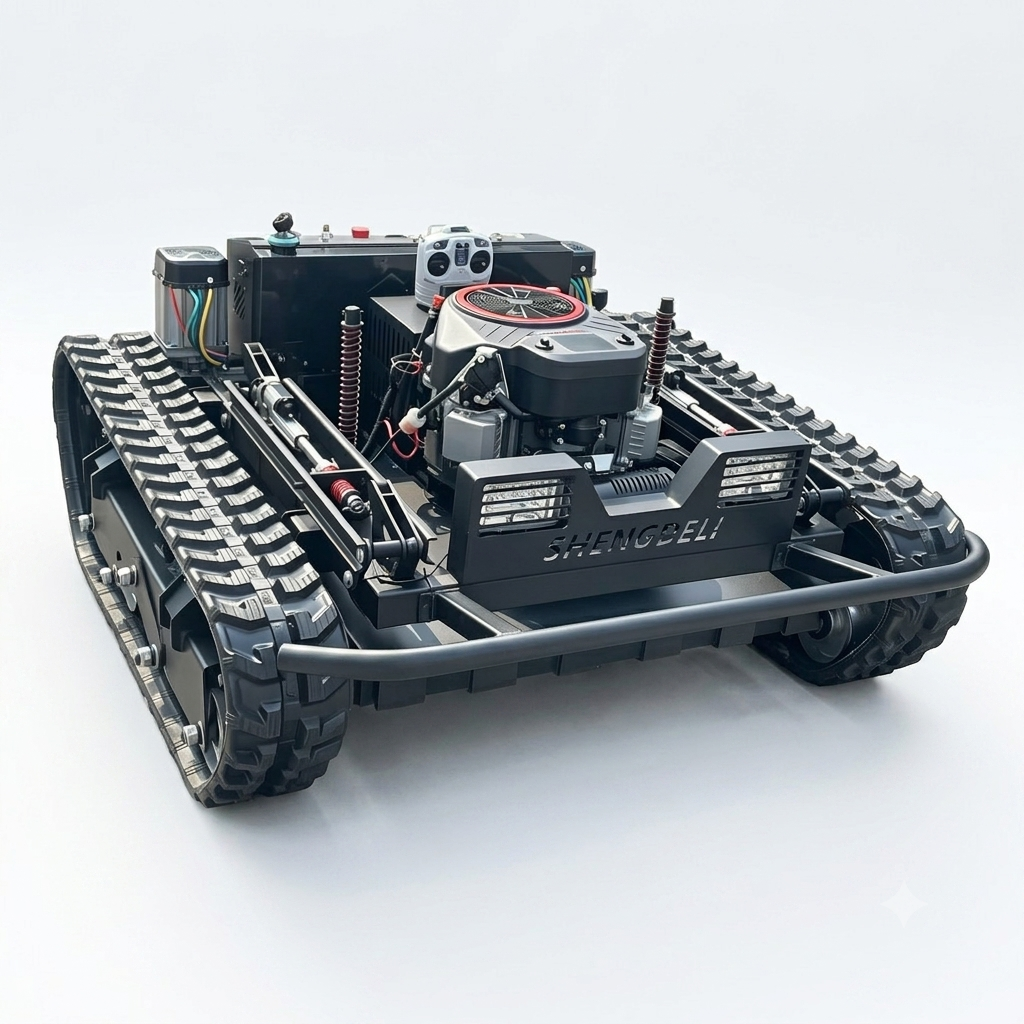
The quotation should make it clear which model, cutting system, accessories, spare parts and documentation are included. Ask for written confirmation of the configuration instead of relying only on photographs.
A useful supplier discussion should cover:
- Site conditions and intended vegetation
- Recommended model and reasons for the recommendation
- Machine and shipping dimensions
- Included remote controls, chargers, tools and accessories
- Consumable and spare-parts list
- Operator and maintenance documentation
- Pre-delivery inspection and support process
Use the RC Slope Mowers product overview to compare the main equipment categories before requesting a recommendation.
Remote control slope mower buyer checklist
- Measured maximum and typical slope angles
- Photos and video of the site
- Vegetation type, height and density
- Required cutting result
- Minimum access width
- Ground and weather conditions
- Transport payload and dimensions
- Preferred cutting width
- Expected operating hours
- Required spare parts and documentation
- Destination country and delivery location
- Number of machines required
Frequently asked questions
What is the most important specification when choosing a slope mower?
There is no single specification that determines suitability. Slope capability, cutting system, traction, machine size, vegetation and access conditions must be evaluated together.
Should I choose a rotary or flail mower?
Rotary systems are often evaluated for grass and routine vegetation maintenance, while flail systems are commonly considered for denser or rougher growth. The correct choice depends on the required finish, vegetation and available machine power.
Does a higher maximum slope rating always mean a better machine?
No. A higher rating is only useful when the complete machine is suitable for the site’s terrain, vegetation, access and operating procedure. Routine work should not be planned solely around a maximum published figure.
What information should I send when requesting a recommendation?
Send measured slope angles, site photographs or video, vegetation details, minimum access width, required cutting result, destination country and expected quantity.
Can remote control eliminate slope-mowing risks?
No. Remote operation can increase operator separation, but safe work still requires a site-specific risk assessment, exclusion zone, visibility, inspection, training and operation within the supplied model’s limits.
Get a site-specific mower recommendation
The most efficient way to shortlist a machine is to share the actual working conditions. Send the RC Slope Mowers team your slope measurements, site images, vegetation type, access width and expected quantity. We can then help identify the product category and specifications that should be evaluated.
Contact us for a factory-direct quotation and technical recommendation.